Jennifer Adkins
IDAHO
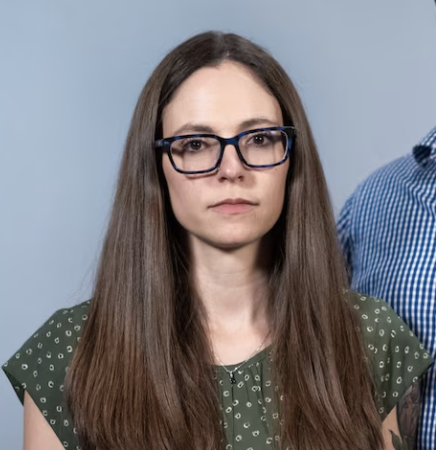
Jennifer Adkins, a 31-year-old mother living in Idaho,
was excited to find out she was pregnant again and began affectionately
calling her baby "Spooky" after finding out that her due date was Halloween.
But at a routine 12-week ultrasound appointment, she found out her baby
had a slim chance of survival and that continuing her pregnancy could
put her health, or even life, in danger.
Adkins' doctors told her the
scan revealed the fetus had excess fluid and skin edema and likely had Turner syndrome,
a rare condition that results from one of the X chromosomes missing.
Adkins' doctor told her the fetus would not survive and she was
surprised Adkins hadn't miscarried already. Adkins also was told that
there was a high likelihood that she would develop Mirror syndrome, a
condition where the pregnant person develops fluid buildup and
can develop preeclampsia, which can result in stroke or death.
Adkins was told that if the laws in Idaho were different,
she would have just been referred to an abortion clinic. But because Roe had been overturned and Idaho's near-total abortion
ban was in effect, they were afraid to refer her to any clinic,
even one out of state.
Kristen Anaya
TEXAS
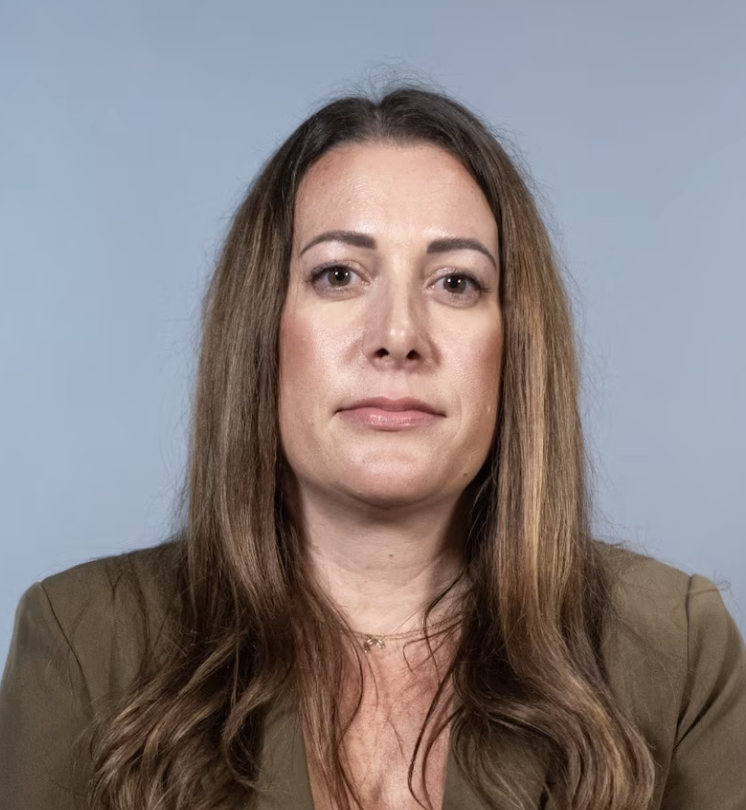
After 10 months of fertility tests, procedures,
surgeries, medication, shots, blood draws, ultrasounds and two egg
retrievals, Kristen Anaya and her husband were elated to be pregnant.
When her water broke at four months pregnant, the couple rushed to the
hospital. An ultrasound confirmed that Anaya had lost nearly all her
amniotic fluid, making it virtually impossible for the fetus to survive.
Heartbroken and in shock, the couple kept asking doctors if there was
anything they could do to save their baby — who they named Tylee —
but there was nothing to be done.
To make matters worse, because the fetus' heart was still beating,
doctors could not induce labor to protect Anaya from infection because
of Texas' abortion ban. Anaya says her doctors needed to be able to
prove that Anaya's life was at risk before intervening.
Anaya developed sepsis and waited in the hospital for over 22 hours
before she was sick enough so that the hospital's advisory board
would allow doctors to give her a life-saving abortion. During that
time, Anaya spiked a high fever, was shaking uncontrollably for hours
and vomited at least eight times, all while taking blood tests every
three hours. She has since required multiple procedures to clear her
uterus.
Nancy Davis
LOUISIANA
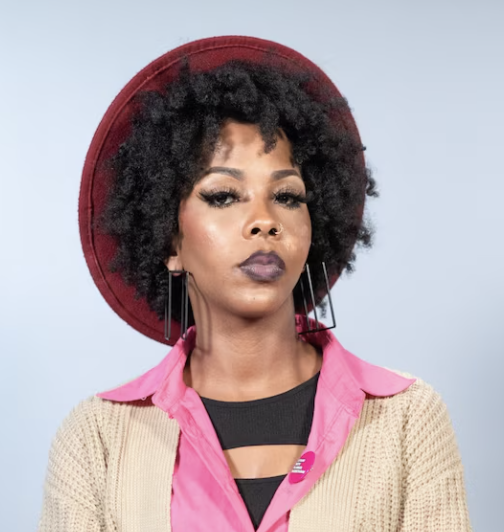
Ten weeks into her pregnancy, Nancy Davis was told
her baby had a rare, fatal abnormality called acrania — in which the
fetus does not have a skull.
Davis' doctors encouraged her to terminate the pregnancy, but after
she agreed they said they would not be able to help her in Louisiana
because there was still fetal cardiac activity.
Davis had to carry her baby for another six weeks before she was able
to fly to New York and get abortion care.
Although Louisiana's abortion ban had exceptions for "medically futile"
pregnancies that cannot survive outside the womb, the hospital where
Davis sought care still denied her request for an abortion.
In addition, Davis was also told that the procedure was not covered
by Medicaid in Louisiana and would cost thousands of dollars.
When she first received the diagnosis at 10 weeks of pregnancy,
medication abortion, which is less costly than an in-clinic procedure,
was still an option, but it was no longer an option six weeks later
when she was able to access care. She had to undergo a two-day procedure.
Kelly Shannon
ALABAMA
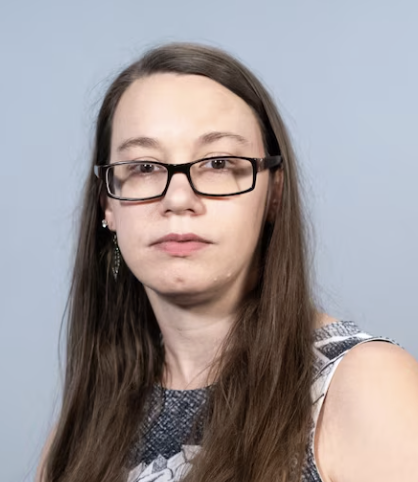
Kelly Shannon and her husband were excited when she
found out she was pregnant last year. The couple, already
parents to a daughter under the age of 2, had been actively trying
for a second child.
Shannon asked for genetic testing, wanting to tell their family the
baby's gender at Christmas, but the couple's excitement quickly turned
to heartbreak.
Genetic testing revealed there was a likelihood her baby had Down syndrome.
Upon further testing, the fetus was diagnosed with multiple life-limiting
genetic anomalies and would likely not survive birth — scans showed
evidence of swelling in the fetus' head and body wall, a heart defect
and a tumor on the fetus' abdomen that was about one-third the size
of the fetus baby and growing.
When Shannon and her husband decided to pursue a termination,
she needed to fill out paperwork and get approvals from two hospital
committees. While the first of the two committees approved her abortion,
the higher-level committee denied her request, according to Shannon.
Shannon had to drive to Richmond, Virginia, to receive abortion care. It cost her
thousands of dollars. After ABC News published a story about Shannon in May, an
anonymous donor called the hospital and paid her remaining medical bills.
Jill Hartle
SOUTH CAROLINA
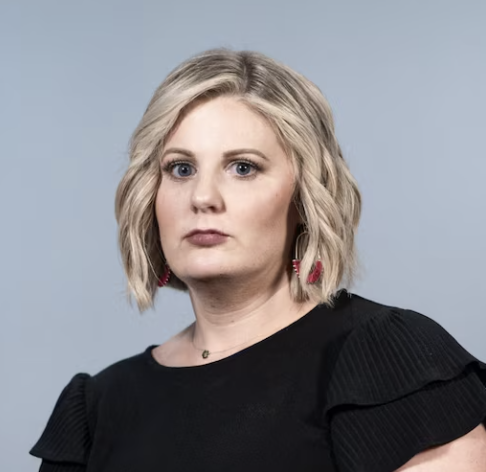
Jill Hartle and her husband, Matt, learned that
their baby had a birth defect called hypoplastic left heart syndrome —
resulting in multiple severe, heart anomalies.
But in South Carolina, Hartle was told that her case was "too nuanced"
and she was denied care. "There is a fetal anomaly exemption in
[South Carolina's abortion] law, but that fetal exemption does not
cover any nuanced fetal anomalies, which is very frustrating," Hartle said.
Hartle and her husband had to travel to Washington, D.C., to get abortion care.
But Hartle had to wait 49 days to get the care that she said she deserved
to get in her home state, with clinics around the country overwhelmed with
patients traveling for care.
Anya Cook
FLORIDA
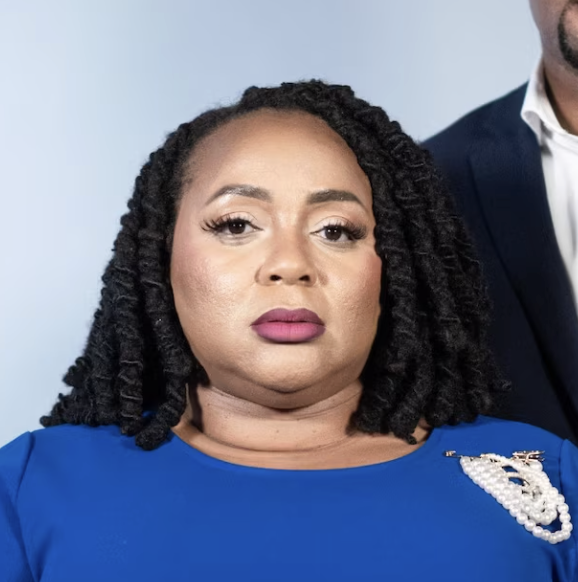
After having dinner, Cook and her husband were in
the parking lot of a restaurant when she felt a gush of fluid come out
of her. She reached out to one of her friends who was a labor and delivery nurse,
and her friend told her to head to the hospital right away.
She was only 16 weeks pregnant.
The couple made a 5-minute drive to the hospital, where she normally
received care. After being wheeled in, Cook sat in the waiting room for
45 minutes, gushing fluid onto the floor.
Cook had suffered a preterm premature rupture of membranes,
when water breaks and amniotic fluid is lost before the fetus is viable.
Cook said that the doctor told her she would deliver in 12 to 24
hours and that she was at risk of hemorrhaging or getting an infection.
But, the doctor discharged her from the emergency room - her life was
not yet at risk. In a state without an abortion ban, Anya would have
been offered an immediate termination to protect her health.
But in Florida, she was given antibiotics and sent home, told to
return immediately if her symptoms worsened.
The next morning, Cook kept a previously scheduled hair appointment,
saying she did not want her mother to worry about her hair if she died.
Cook delivered the fetus alone in the bathroom of a hair salon,
hearing her daughter hit the toilet. She did not deliver the
placenta and could feel the umbilical cord still attached to her.
In the process, she lost a life-threatening amount of blood.
She became critically ill, was put on a ventilator due to blood loss
and was in the hospital for six days. She's had one follow-up procedure
to remove placenta from her uterus; she needed another operation in
order to potentially have children again.
Chloe Partridge
ARIZONA

Chloe Partridge was excited when she found out
she was pregnant with her second child.
But at 23 weeks, Partridge learned that her fetus had holoprosencephaly,
a fatal anomaly in which the fetus' brain does not develop as it should —
failing to divide into two hemispheres.
Heartbroken, Partridge said she didn't want her baby to suffer or be in
pain and she scheduled a termination in June 2022.
But when Roe v. Wade was overturned days before her scheduled care,
the abortion was canceled.
Partridge scheduled another termination appointment at a clinic in Colorado.
But after posting her story on social media, her story went viral and
threats were being made against her life and clinic staff so her appointment
was canceled.
Partridge had to carry her pregnancy to term. She gave birth to her baby —
who she named Lela Grace — and watched her die 44 hours after she was born. Partridge said those two days were "horrible" and she felt there was
nothing she could do to protect her baby but give her pain medicine.
Allie Phillips
TENNESSEE
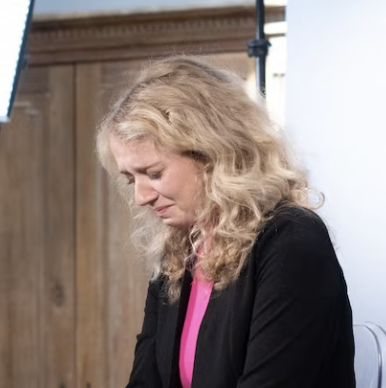
Allie Phillips' baby was diagnosed with multiple
lethal anomalies, but Tennessee doesn't have exceptions for fatal
fetal anomalies. Phillips and her husband spent days looking for a
place where she could get an affordable termination.
She finally found a clinic in New York that could take her. By the time
she got there, her situation was far more dire — her fetus had died inside her.
After getting tests and routine bloodwork at the clinic, Phillips had
an ultrasound — only to discover that the fetus no longer had a
heartbeat and was not moving.
"The doctor told me that because we don't know when my daughter passed,
there is about a two-week window when you carry a deceased fetus when your
body doesn't recognize it when you are at risk for blood clots,
infections or going septic," Phillips said. She had her abortion within an hour of
finding out her baby had died.
Phillips said she fell into a deep depression when she returned home
and didn't leave her room for two weeks.
Chelsea Stovall
ARKANSAS
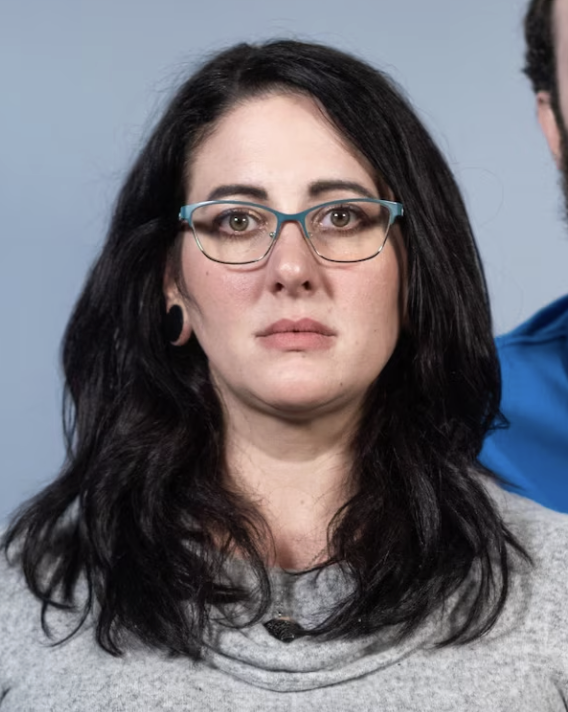
Already parents of two, Chelsea Stovall and her
husband were excited to learn that she was pregnant.
But, when she was 20 weeks pregnant, Stovall found out that her
fetus had multiple anomalies — the fetus was abnormally small,
growing without a chest cavity and organs that were wrapped around
her heart.
But Arkansas' near-total abortion ban only makes exceptions to save
the life of the mother. Devastated, Stovall and her husband had to do
their own research to find a clinic where she could get a termination.
The couple, surrounded by states with bans that have ceased nearly
all abortions, drove 400 miles to Illinois to get a termination.
Stovall said it cost them all their savings, more than $3,000,
nd her insurance would not cover the care.
Due to Illinois law, Stovall's husband couldn't be with her for the
termination, which she said made her feel even more lonely.
She also asked for her baby's remains after the procedure, but
the clinic denied her request.
Stovall told ABC News in December that they do not plan to have more
children because of their fear that this could happen again.
Meagan
WISCONSIN
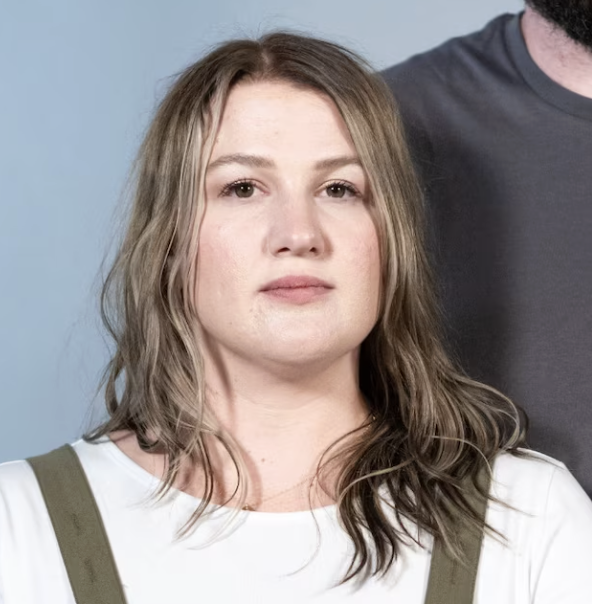
Meagan and her husband became pregnant for the
first time earlier this year. At her 20-week ultrasound, they
received devastating news.
Their baby was extraordinarily small and unusually small in a way
that was indicative of something very abnormal. More testing
indicated that the fetus had a severe, life-limiting anomaly
called skeletal dysplasia.
Meagan was also diagnosed with placenta previa, a rare condition in
which the placenta covers the opening of the mother's cervix during
pregnancy, putting her life in danger. It would be too high risk for
her to deliver vaginally, because the baby would have to go through
the placenta and Ross could experience severe bleeding.
In July, when Meagan was still pregnant, Wisconsin's near-total
abortion ban was in effect, only allowing the procedure for the life
of the mother, and even then three doctors have to sign off on an abortion.
While doctors who Crow reached out to agreed with his assessment
that Meagan's condition was a "clear risk to her life with a potential
fatal diagnosis for her pregnancy," he was not able to convince
colleagues to perform an abortion for her in Wisconsin.
Crow, Meagan and her husband had to research and make countless
calls to find her care that would be covered by her insurance.
She then had to travel to Minnesota to get a termination.